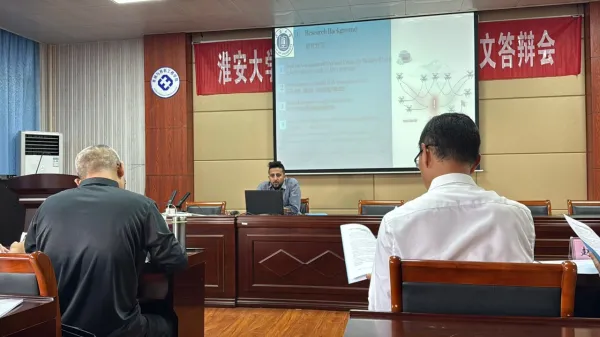
In a distinguished global scientific achievement, Emirates International University graduate, Engineer Muhannad Al-Madhaji, achieves research excellence in artificial intelligence for autonomous aircraft in China.
University Media
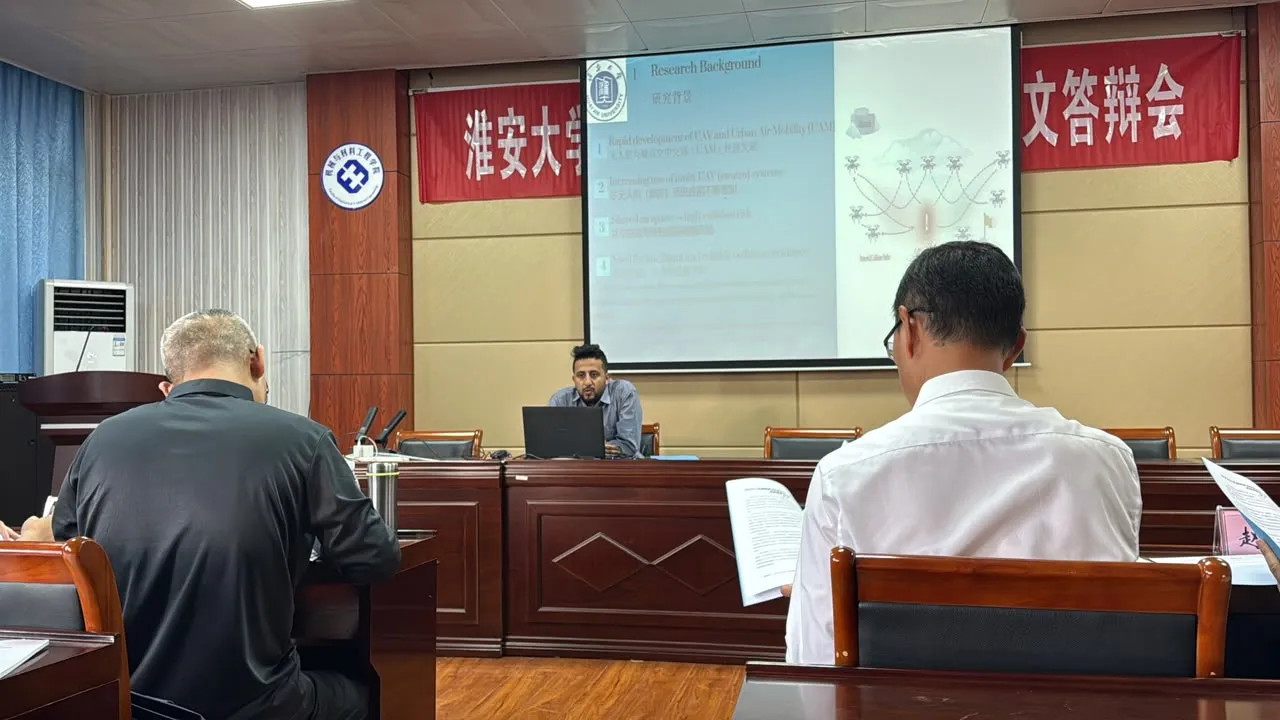
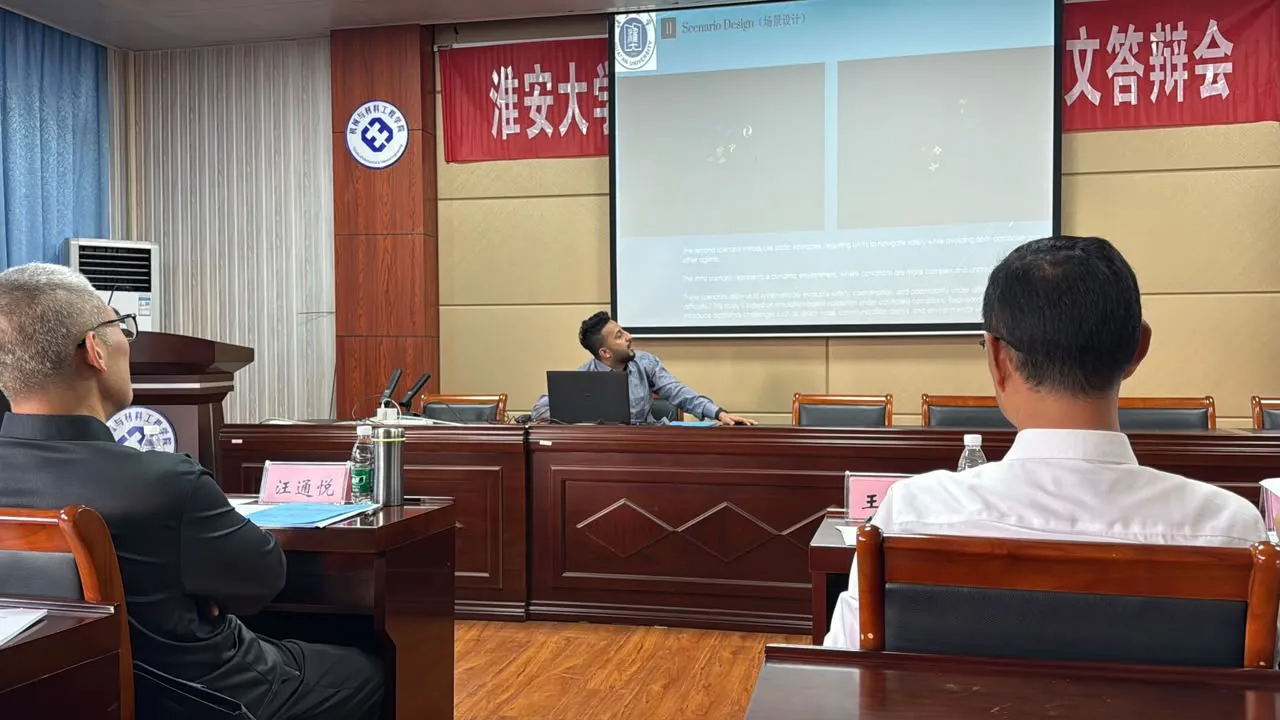
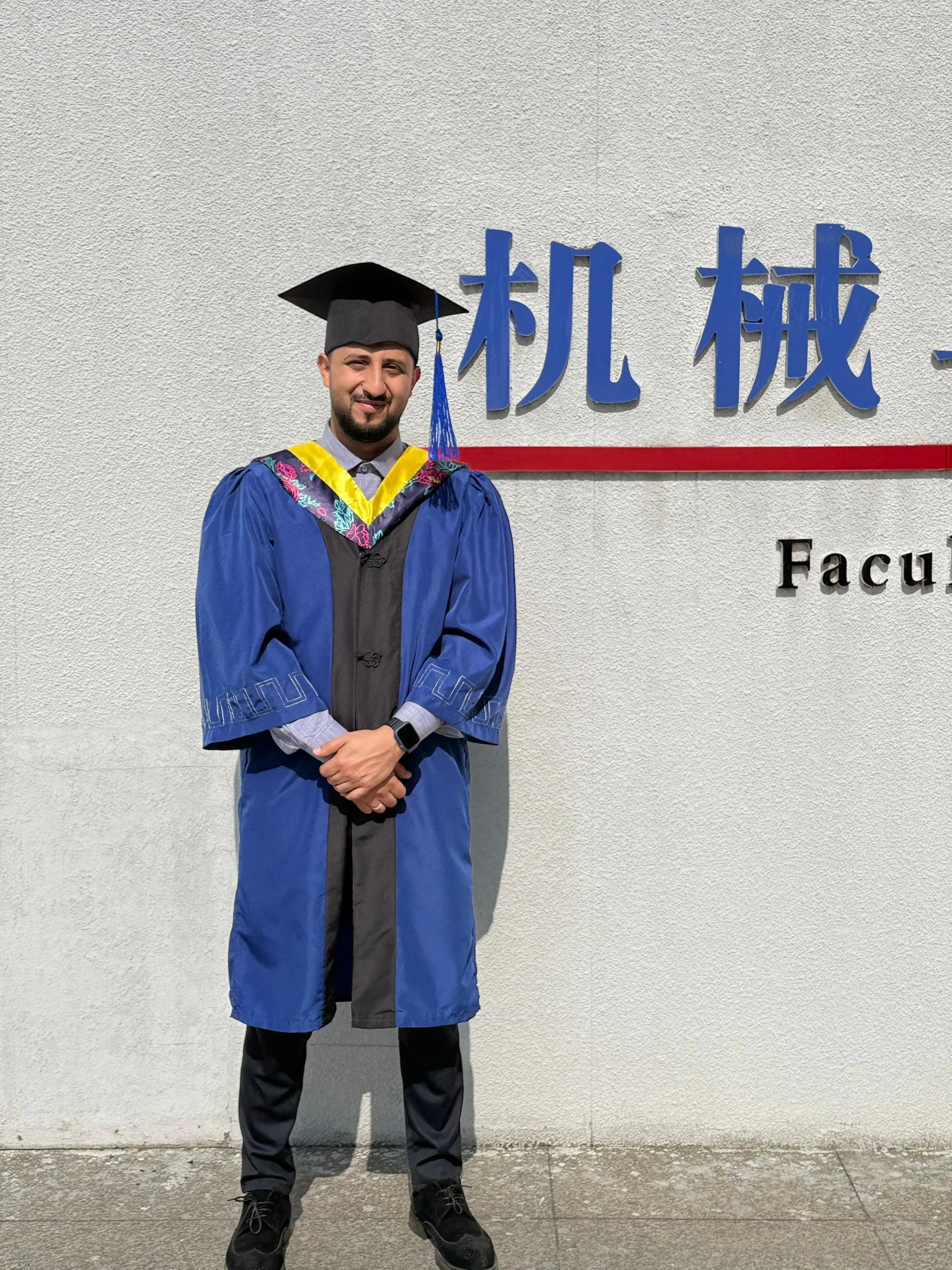
Emirates International University continues to reap the rewards of its graduates' academic excellence in various international scientific forums. Engineer Muhannad Mohammed Ahmed Mohammed Al-Madhaji, a graduate of the Mechatronics Engineering Department, achieved a remarkable research accomplishment by obtaining a Master of Engineering degree in Transportation Engineering, Equipment, and Intelligent Technologies from Huaian University in China. This followed the successful defense of an advanced thesis addressing one of the most important future fields in artificial intelligence and drones.
The thesis was titled:
"Evaluating the Effectiveness of Collision Avoidance Algorithms for Autonomous UAVs: A Comparative Study of MARL and VO Techniques"
It focused on evaluating the effectiveness of collision avoidance algorithms for autonomous UAVs through a comparative study of MARL (Multi-Agent Reinforcement Learning) and VO (Velocity Obstacle) techniques used in conventional engineering systems.
The study represents a significant scientific contribution to the field of intelligent multi-aircraft systems. The researcher developed an advanced simulation environment that replicates the operation of swarms of eight decentralized UAVs, testing their ability to coordinate, make decisions, and avoid collisions in diverse and complex environments.
The results demonstrated the superiority of AI technologies based on multi-agent reinforcement learning in achieving higher levels of adaptability and collective coordination among aircraft. This contributes to enhancing the safety and operational efficiency of future air systems. Meanwhile, the speed obstacle algorithm proved highly efficient in processing speed and engineering calculations, though with some limitations in crowded dynamic environments.
The study concluded that MARL technologies represent a promising direction for developing autonomous navigation systems for multi-agent aircraft. Hybrid solutions can be designed that combine the advantages of AI with traditional engineering solutions to achieve optimal performance and operational flexibility.
Engineer Muhannad Mohammed Ahmed Mohammed Al-Madhaji is a graduate of the Emirates International University, where he graduated in 2021 with a degree in Mechatronics Engineering, ranking among the top of his class. He has continued his distinguished academic and research career, culminating in this international scientific achievement.
Speaking about his academic journey, Engineer Muhannad Al-Madhaji said:
"I am proud to belong to the Emirates International University, which was the true starting point in my academic and professional career. It provided me with a stimulating academic environment and contributed to building the foundations of knowledge and scientific research upon which I relied to pursue my postgraduate studies. What I have achieved today is the fruit of a journey of diligence and continuous learning, and I look forward to continuing research and development in the fields of artificial intelligence and autonomous aircraft, contributing to providing innovative technological solutions that serve the future of smart systems."
This remarkable achievement reflects the high level of scientific competence possessed by Emirates International University graduates and their ability to compete and excel in the most prestigious academic and research programs worldwide. It also underscores the quality of the educational outcomes offered by the university and its role in preparing qualified professionals who possess the knowledge, skills, and ability to innovate and create, thus enhancing its academic and scientific presence at both the regional and international levels.
Emirates International University... Where success stories begin and extend towards global horizons of innovation.
#EmiratesInternationalUniversity
#Modernity_Excellence
#EIU