A Promising Engineering Innovation Enhances Yemen's Energy Future:
Emirati University Petroleum and Gas Engineering Students Discuss a Unique Project to Improve Oil Production in the Judah Field, Sayun-Masila Basin
University Media
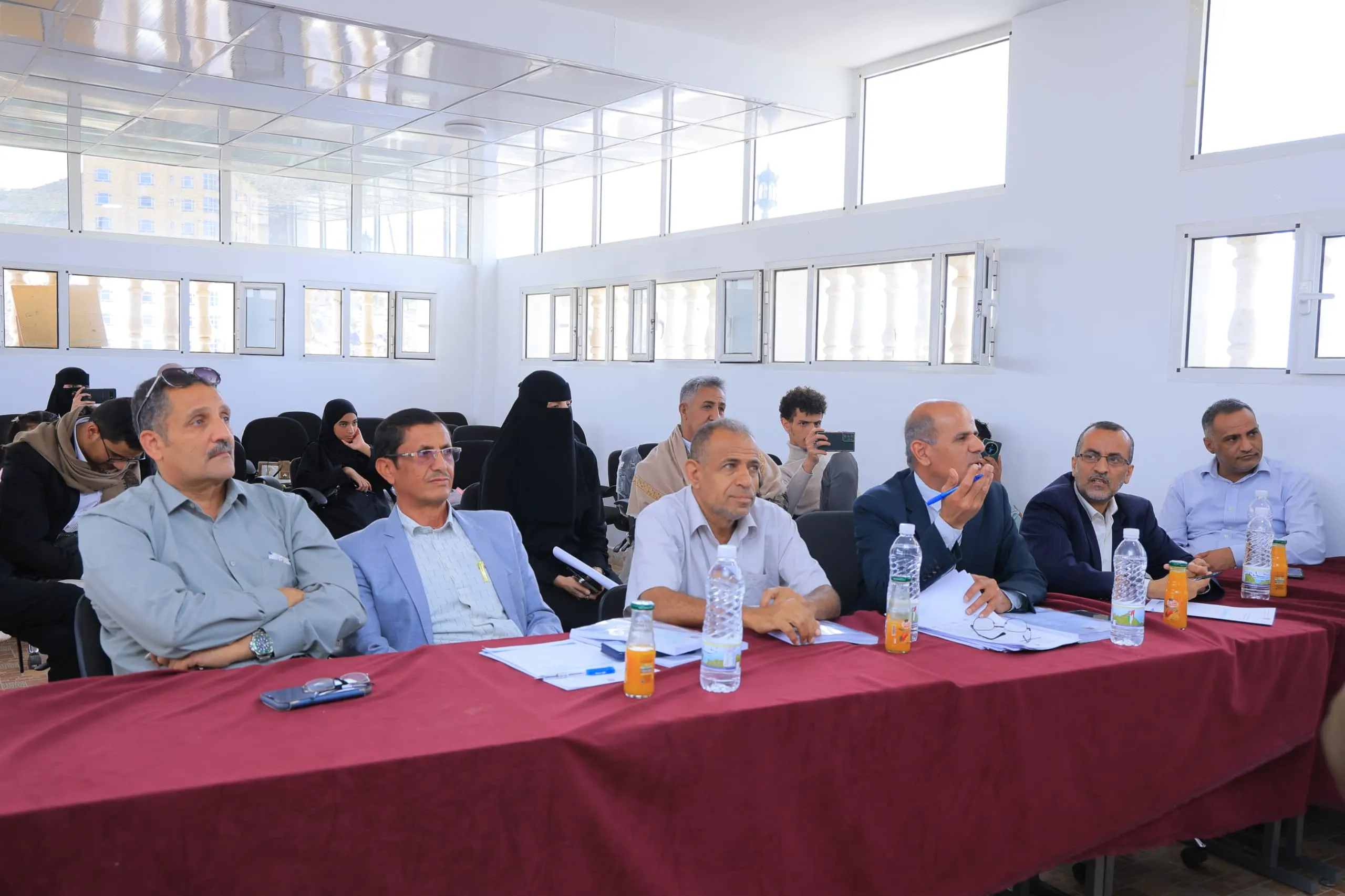
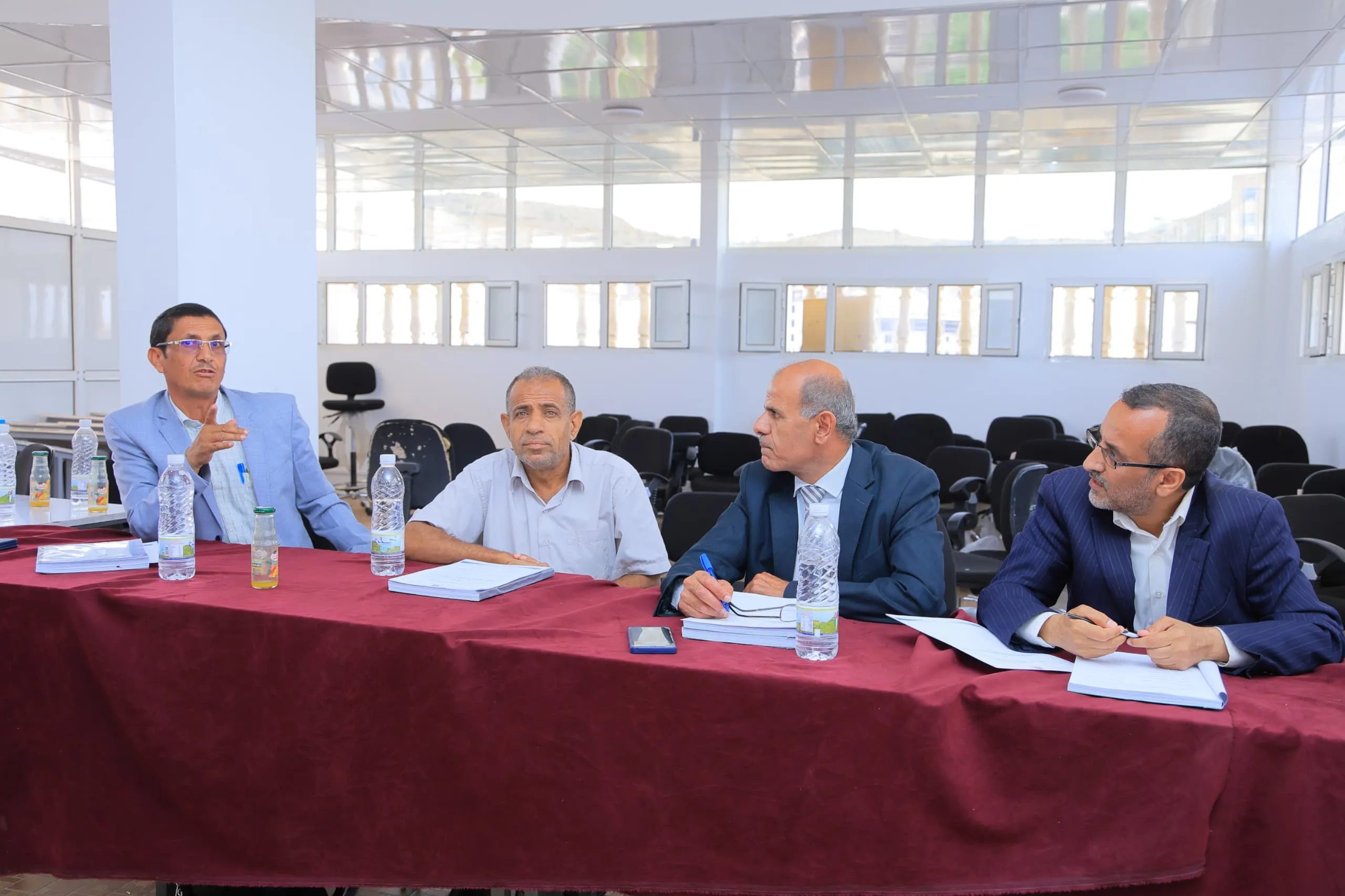
In an academic setting reflecting the high level of scientific and applied excellence that the Emirati International University strives for, a select group of students from the Petroleum and Gas Engineering Department discussed a unique graduation project entitled: “Evaluation of the Water and Gas Injection System for Production Enhancement in the Judah Field – Block 32 – Sayun-Masila Basin – Yemen.”
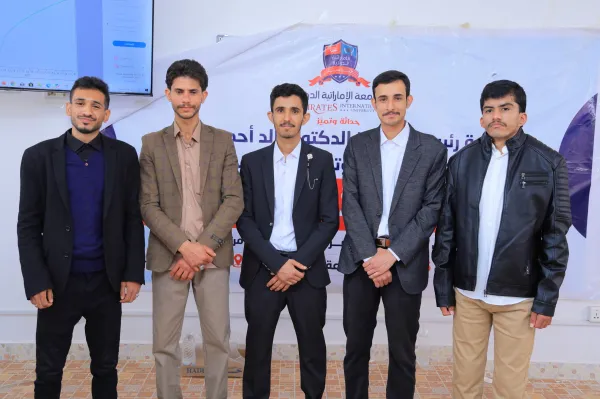
The project is the culmination of outstanding scientific and research efforts by students: Basil Mansour Ahmed Majidi, Mohammed Omar Yahya Al-Ahrami, Osama Musleh Ali Al-Jadawi, Radhi Ahmed Naji Al-Tam, and Ali Ibrahim Hassan Al-Qutari. It was supervised by Dr. Abdulraqib Al-Qadi, with the assistance of Engineer Abdullah Al-Maghles. The discussion committee consisted of: Professor Ibrahim Fara’a, Professor Hani Damaj, Dr. Abdulraqib Al-Qadi, and Engineer Abdulsalam Mohammed Al-Kamel.
The project is a prime example of applied research that bridges academic knowledge with the needs of the oil and energy sector. The study focused on using secondary and enhanced oil recovery techniques to increase production efficiency, reduce losses, and improve the operational performance of the oil field.
The research team relied on building a dynamic reservoir simulation model using Eclipse 2014 software. This reflects the high level of practical and technical training that university students receive within a modern educational environment that meets global standards in engineering and energy. The study results showed that the reservoir contains 22.35 million barrels of oil. Accurate historical matching was performed to verify the model's reliability before commencing future forecasting and simulation operations.
The study also explored several scenarios for improving recovery through gas and water injection. The third scenario, based on gas-water alternating injection (WAG) technology, proved highly efficient, achieving the best results by increasing the recovery factor by 3.44% and boosting production to approximately 860 million barrels. This reflects the significant scientific and economic value of the project.
This achievement underscores the significant attention the Emirates International University (EIU) gives to the quality of engineering education. This is achieved through a focus on practical training, engineering simulations, and scientific research related to development and energy issues, contributing to the preparation of graduates capable of providing innovative solutions that serve the national economy and keep pace with the evolving demands of the local and regional labor market.
EIU continues to solidify its position as a leading academic institution in developing high-quality educational outcomes that combine scientific excellence, applied skills, and a forward-looking vision to cultivate the leaders and engineers of tomorrow.
#EmiratesInternationalUniversity
#InnovationExcellence
#EIU