Civil Engineering Students Conduct Practical Experiment to Measure Drinking Water Quality During a Scientific Visit to the Sanitary Laboratory at the University of Science and Technology
University Media
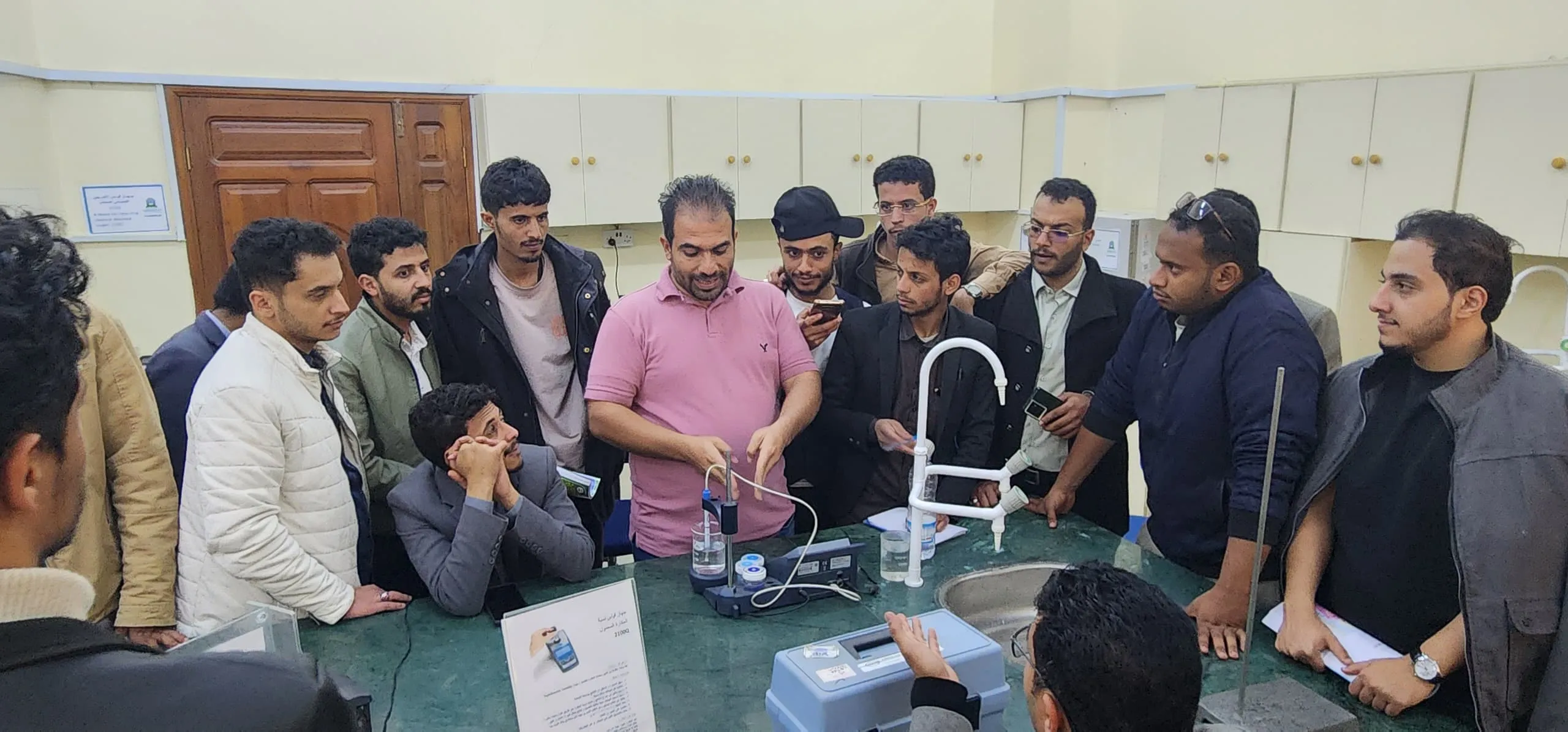
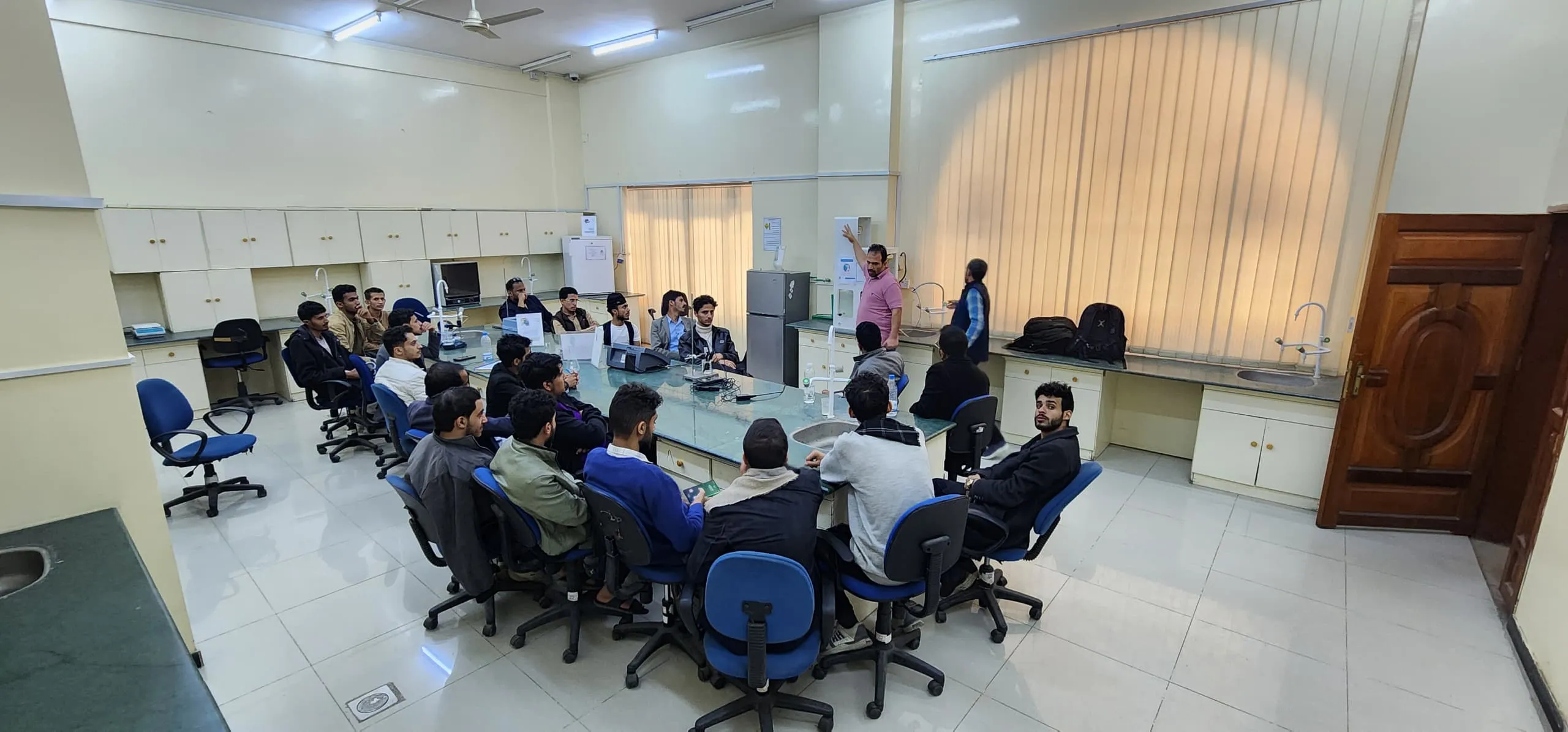
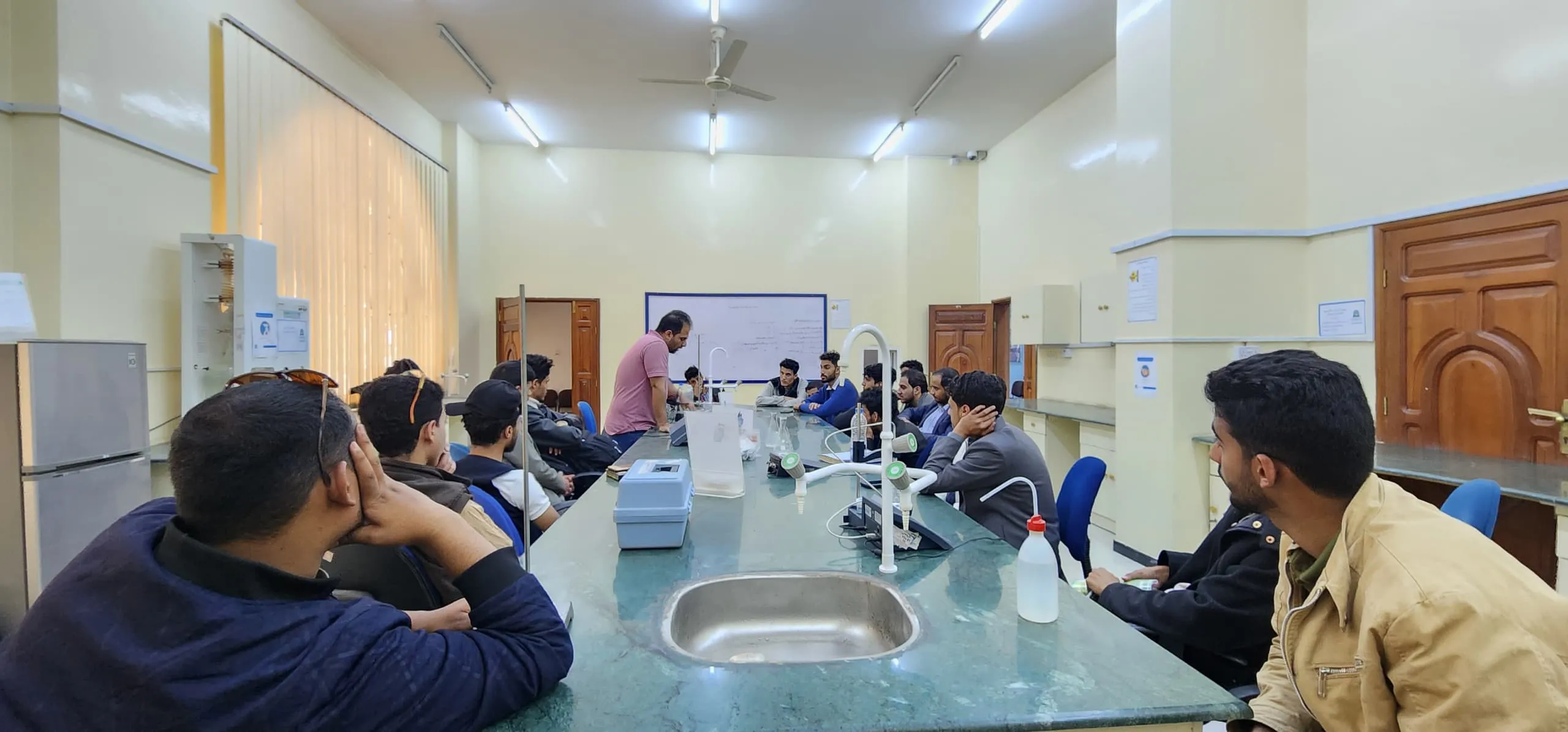
As part of the academic and scientific partnership between the Emirates International University and the University of Science and Technology, and in an effort to exchange expertise, enhance practical application, and connect theoretical courses with real-world experience, third-year civil engineering students conducted a scientific visit to the Sanitary Laboratory. During the visit, they performed an advanced practical experiment to measure the electrical conductivity (EC) of drinking water, a crucial scientific indicator for assessing water quality and its suitability for human consumption.
The visit aimed to introduce students to the concept of electrical conductivity, its scientific implications, and its importance in determining the percentage of dissolved salts in water and their impact on public health. This contributes to developing engineers with a practical scientific awareness related to vital environmental and societal issues.
During the visit, supervised by the department's academic coordinator, Engineer Saddam Hussein, students conducted an experiment measuring the electrical conductivity of various drinking water samples, including tap water, filtered water, and mineral water. They used an EC meter, calibrated with a standard potassium chloride (KCl) solution, following precise scientific steps. These steps began with calibrating the meter, then measuring the samples, recording the results, and finally comparing them to established drinking water standards, including those set by the World Health Organization (WHO), which defines the acceptable limit for electrical conductivity as less than 500 microsiemens/cm.
The experiment helped students understand the relationship between dissolved salt concentration and electrical conductivity values. It also enhanced their skills in using laboratory equipment and analyzing scientific results, and highlighted the pivotal role of civil engineering in the fields of water, public health, and environmental sustainability.
The visit witnessed outstanding student engagement, with students actively participating in the experiment and posing scientific questions about the impact of electrical conductivity on water potability and its implications for industrial and environmental uses.
This academic visit is part of the Emirates International University's (EIU) strategy to broaden academic collaboration with universities and educational institutions, and to enhance applied education, thereby contributing to the development of qualified engineering professionals capable of confidently and efficiently addressing the challenges of the scientific and professional landscape.
#EmiratesInternationalUniversity
#ModernityExcellence
#EIU