“Al-Mustafa Tower”: A Promising Engineering Project Reflecting the Excellence of Civil Engineering Students at Emirates International University
University Media
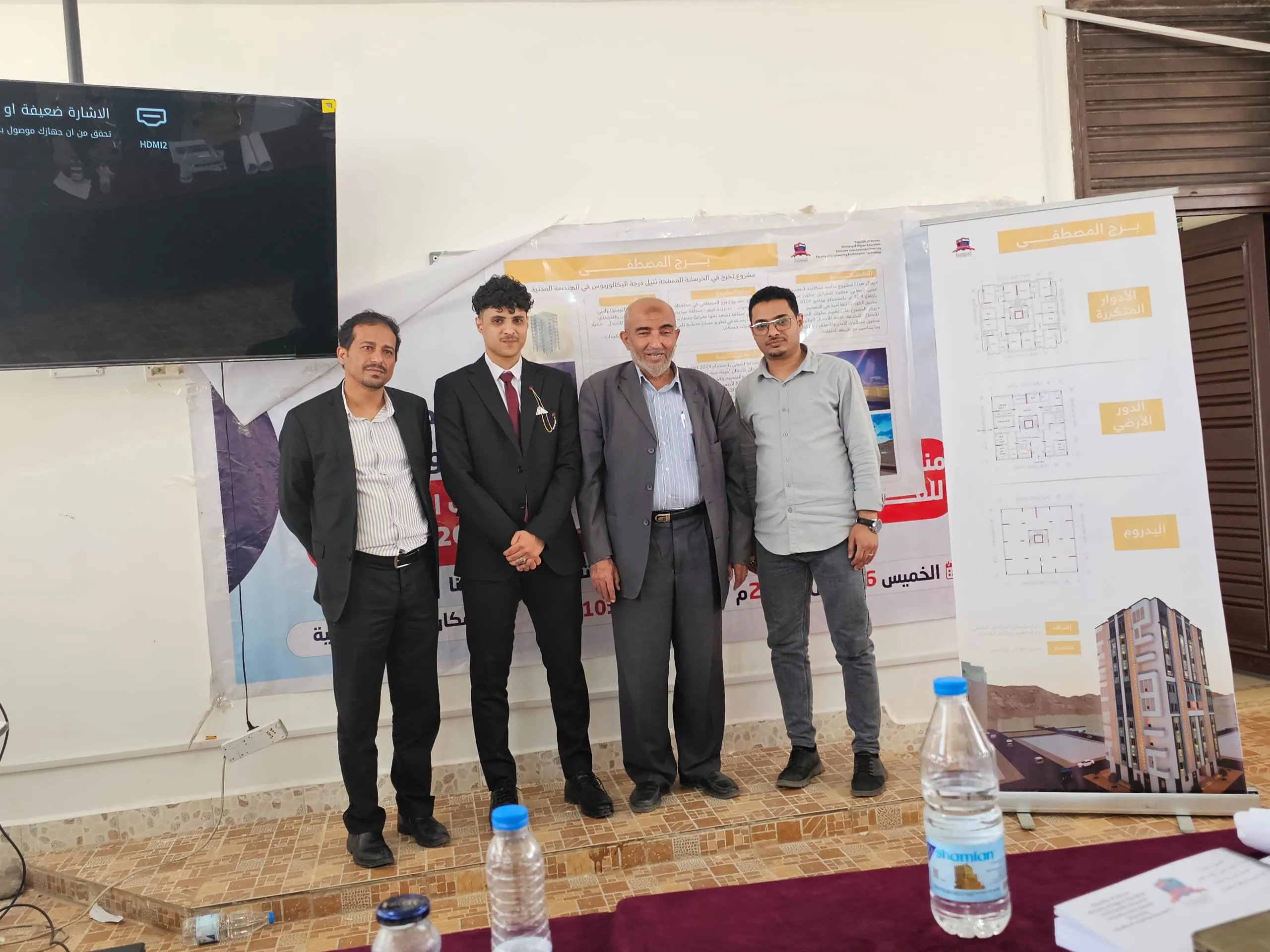
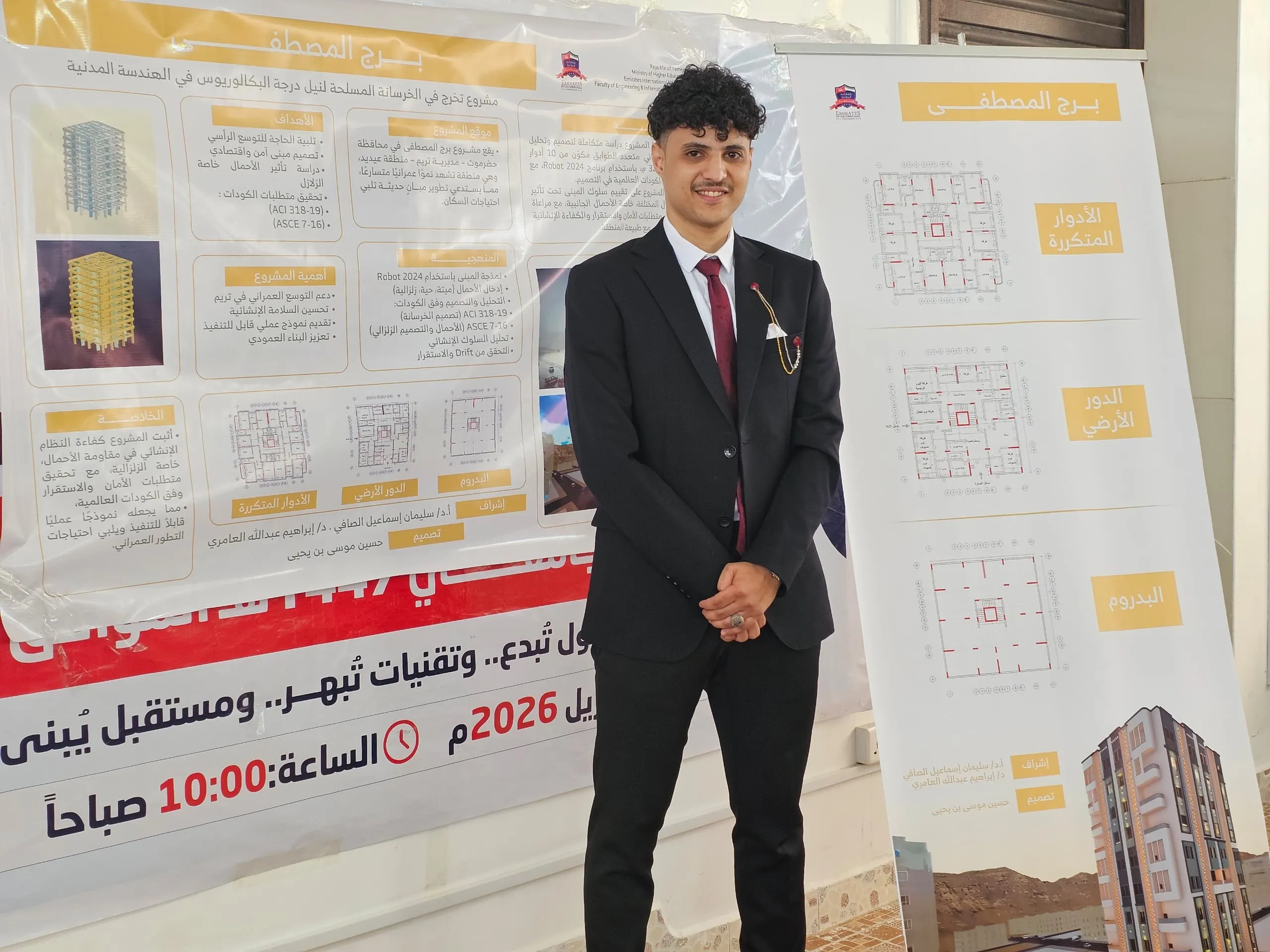
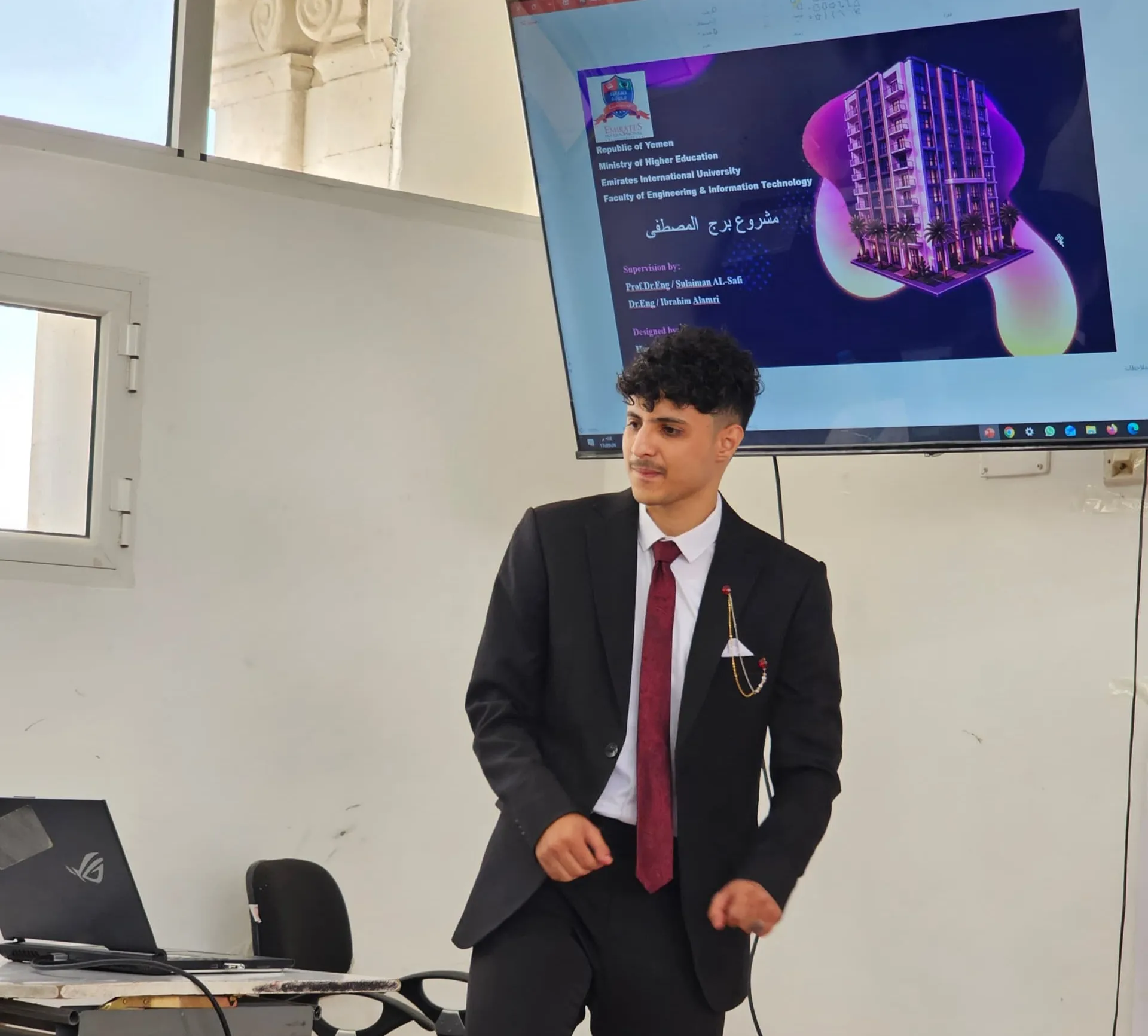
From the heart of engineering innovation and the wellspring of ambition that shapes the future, the College of Engineering and Information Technology at Emirates International University witnessed the discussion of a distinguished graduation project in Civil Engineering entitled: “Design of Al-Mustafa Tower.” The project was presented by the talented student Hussein Moussa Bin Yahya as part of his graduation projects for a Bachelor of Science degree in Civil Engineering.
The project embodies an advanced academic level, reflecting the quality of engineering education and the high-caliber graduates that Emirates International University is committed to producing. It involved a comprehensive study of the design and analysis of a 10-story, multi-story concrete building reaching a height of 32.4 meters, using the Robot 2024 software and adhering to the latest international codes in engineering and structural design.
The project focused on analyzing the building's behavior under various loads, particularly lateral loads and seismic activity, while achieving the highest standards of safety, stability, and structural efficiency, in accordance with the nature of the area and the requirements of modern urban expansion.
The project is located in the Hadramawt Governorate, specifically in the Tarim District, in the Eidid area. This region is experiencing rapid urban growth, making the project a practical model that reflects the importance of safe and sustainable vertical expansion to meet the needs of the population and support urban development.
The project also aimed to achieve several important engineering and community objectives, most notably: designing a safe and economical building according to international standards; studying the impact of loads and earthquakes on concrete structures; applying the international design codes ACI 318-19 and ASCE 7-16; supporting modern urban expansion in the city of Tarim; and providing a highly efficient and implementable engineering model.
The student's methodology for the project relied on building modeling and the analysis of dead, live, and seismic loads using the latest engineering software. This included verifying drift and structural stability to ensure the building's safety according to international standards.
The project results demonstrated the efficiency of the proposed structural system in resisting various loads, particularly seismic loads, while meeting safety and stability requirements. This makes it a practical engineering model that keeps pace with urban development and reflects the high level of academic and applied training possessed by students at the Emirates International University. The discussion was held under the supervision and input of Professor Dr. Sulaiman Ismail Al-Safi, Dr. Ibrahim Abdullah Al-Amiri, and the department's academic coordinator, Engineer Saddam Hussein.
Through these high-quality projects, Emirates International University continues to solidify its position as a leading academic environment that cultivates engineering talent capable of innovation, competition, and active contribution to building the nation's future.
#EmiratesInternationalUniversity
#ModernityExcellence
#EIU