Emirates International University Participates with Five Innovative Projects at the First Scientific Innovation Projects Forum
University Media
As part of its active participation in the First Scientific Innovation Projects Forum, organized by the Ministry of Education and Scientific Research, Emirates International University continues its distinguished presence by showcasing five innovative projects presented by its students in the fields of artificial intelligence, biomedical engineering, and mechatronics engineering. This reflects the university's focus on applied innovation and linking scientific research to societal and developmental issues.
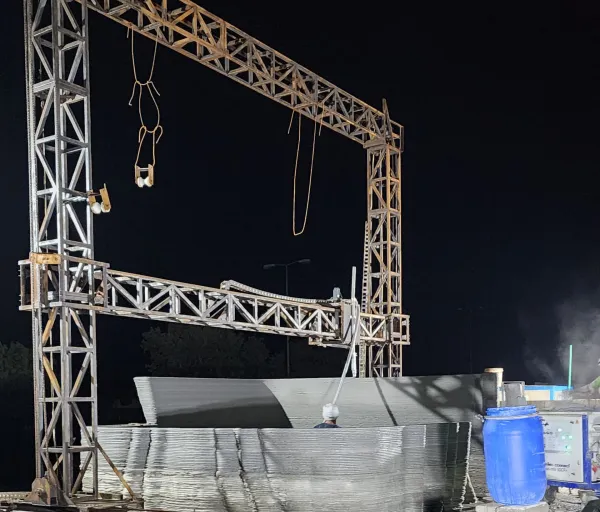
The first project is a "3D Concrete Printer," an innovative engineering solution for automating construction using 3D printing technologies. This contributes to reducing construction time, lowering costs, improving quality, minimizing risks, and decreasing reliance on manual labor.
The project is distinguished by its use of a globally recognized technology with a local design, making it suitable for manufacturing within Yemen and ideal for housing needs, emergency projects, and rapid construction. The first project involved a student team consisting of: Zakaria Mukhtar Al-Qahtani, Abdulmalik Abu Hadi, Adel Mohammed Jabr, Anan Al-Kaboudi, Kamal Al-Sabri, Mohammed Al-Abdi, Mohammed Al-Ziyadi, Mohammed Al-Ghasani, Mohammed Nabil Al-Souswa, and Wasim Al-Badawi, under the supervision of Professor Dr. Radwan Al-Badhiji.
The second project was the “Design and Implementation of an Automated Production Line for Biodiesel from Waste Cooking Oil.” This strategic project aims to convert waste into a clean and sustainable energy source, using advanced industrial control systems based on PLCs and SCADA, and adhering to approved industry standards.
Laboratory tests proved the product's viability and quality, opening up broad prospects for adopting the project as a national initiative that serves the economy and infrastructure, and promotes the shift towards alternative fuels.
The following students participated in implementing the project: Abdullah Yahya Matari, Khalid Qarmoush, Ezz Al-Din Al-Maliki, Abdullah Bamdhaf, Talal Al-Osaimi, and Nasr Jazilan, under the supervision of Dr. Farouk Al-Fahidi.
The third project is an intelligent program, “Automated Segmentation and Annotation of MRI and CT Scans in Cancer Detection.” This innovative project utilizes artificial intelligence to automatically segment and analyze medical images, rendering them into 3D models, with the aim of aiding in the early detection of lung and colon cancers.
The research team used the U-Net model for tumor segmentation, trained on refined medical data from CT and MRI images, thus enhancing diagnostic accuracy and speed.
The project was presented by students Mohammed Sadiq Ali Al-Jama’i, Ali Khalid Zaid, Munther Al-Zuhairi, and Alaa Al-Rawdhi, under the supervision of Dr. Mohammed Al-Alfi.
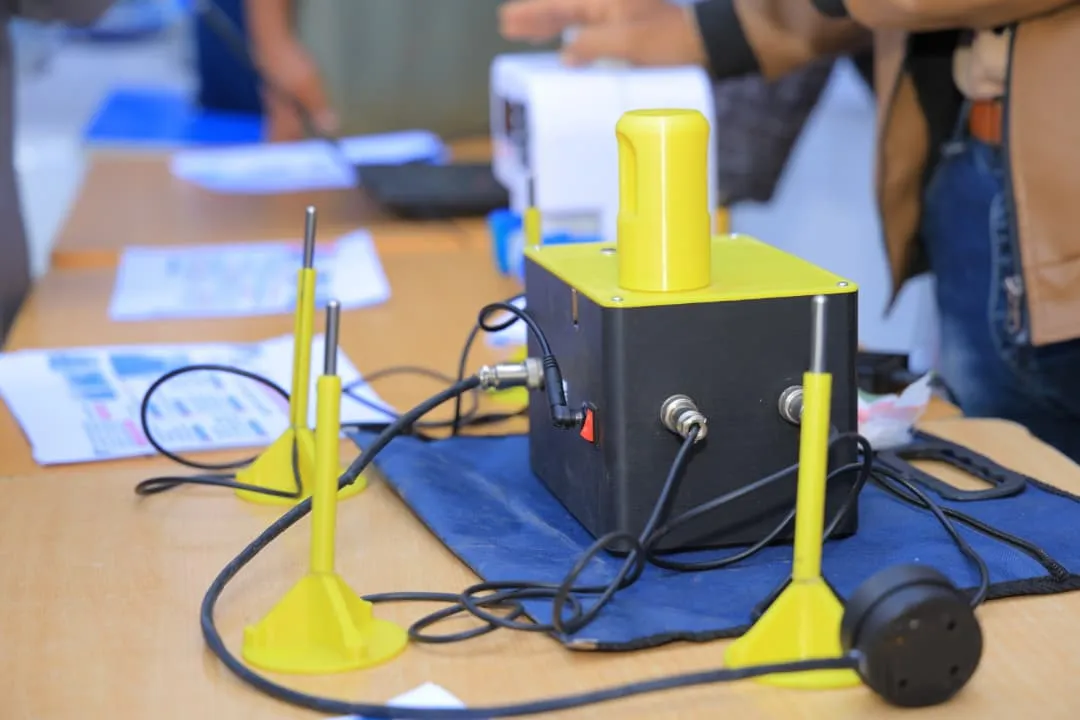
The fourth project is an integrated calibration device for neonatal intensive care units. It aims to improve the calibration accuracy of infant incubators, radiation warmers, and phototherapy equipment to reduce technical errors and protect the lives of infants, particularly in developing countries. The device is distinguished by its integration of temperature, humidity, airflow, noise, and light intensity measurements into a single, high-precision, and low-cost unit. Data can be displayed on a mobile phone via an HTML interface.
Comparison results with international standard calibration devices have demonstrated the device's efficiency and high accuracy.
The project was developed by students Ayham Waleed Abdullah, Ayham Abdullah Al-Badani, Abdulrahman Taha Abdan, Jamal Jameel Hazaa, Ziyad Awad Al-Sharif, and Hassan Saeed Basalma, under the supervision of Dr. Mohammed Al-Alfi and Dr. Mohammed Faisal.
The fifth project is the development and design of a low-cost, open-source infusion pump. This project aims to provide a smart, locally produced alternative to expensive infusion pumps, utilizing open-source technologies and precise control via electronic controllers, with remote control capabilities via a mobile application.
This project addresses the challenges facing the healthcare sector under current circumstances, particularly the difficulties in importing and maintaining equipment. It is the first of its kind locally, incorporating smart features that enhance safety and accuracy. The project was presented by students: Abdullah Ali Falita, Mukhtar Saleh Muawada, Osama Tawfiq Al-Sharjabi, and Suha Muhi Al-Din Al-Dimashqi.
These projects collectively embody the vision of the Emirates International University in supporting applied innovation and empowering students to offer practical scientific solutions that serve humanity and society. They also affirm that the university has become a true incubator for entrepreneurial ideas and high-quality, applicable projects across various vital fields.
#EmiratesInternationalUniversity
#Innovation_Excellence
#EIU